

On Something, Life After Legalization
Client: Colorado Public Radio
A podcast exploring the political, legal and cultural effects of marijuana legalization. From Colorado Public Radio and PRX, these are stories about life after legalization, hosted by journalist Ann Marie Awad.
I created illustrations for each episode for season 3 of On Something Podcast. Listen to the full season here.

Episode 1: A Laboratory For Fairness
This season, On Something explores the pursuit of social equity in the cannabis industry, and what it can teach us creating a fairer society. But first of all, what does social equity even mean?

Episode 5: Left Behind
Fred Harris sat in prison for a marijuana conviction in Colorado while the legal cannabis business blossomed into a $2 billion industry.
![Episode-2_3000x2000[WEB].jpg](https://static.wixstatic.com/media/f0dde1_dcfb2bd3b81c45aa9ef0e2dc7aed620a~mv2.jpg/v1/fill/w_378,h_250,al_c,q_80,usm_0.66_1.00_0.01,enc_avif,quality_auto/Episode-2_3000x2000%5BWEB%5D.jpg)
Episode 2: “Black-owned”
Massachusetts won national praise for being the first state to legalize recreational weed with an eye to equity. Since then, the reality has been more complicated.
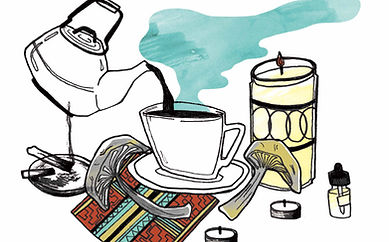
Episode 6: Psychedelics & Safe Spaces
Psychedelics are more than just cutting edge — they’re trendy. But are the people who pioneered the use of these medicines now in danger of being written out of the next chapter of psychedelic history?

Episode 3: Funny Business, Shenanigans and Chicanery
Mildred Barnes Griggs wanted to get into the cannabis business to help revive the economy of her hometown. What happened next raised a lot of questions.

Episode 7: Harm, Healing and Hope
Ann first met Logan Kinamore in 2014, when she was a young journalist covering her first story about drug policy.

Episode 4: Not Quite Legal
Ronnie Bell is a pot farmer in California’s Inland Empire. Despite living in a state where weed is legal, Ronnie’s farm is not.

Episode 8: By Any Other Name
If you Google the question “Is marijuana racist?” there’s no shortage of articles available to try and answer the question definitively. But the racial baggage behind the word is much more complicated than a simple yes or no answer.